
While Paytm (One97 Communications) is not completely past regulatory hurdles, its share price has gained in the last month or two. The Paytm handle migration is complete along with FDI clearance necessary for the Payment Aggregator (PA) license. UPI consumer data indicates stable market share, and expansion in partner networks in financial distribution. All this implies Paytm could be set to meet guidance of turning Adjusted Ebitda breakeven by Q4FY25 (ex of UPI-incentives).

With duties at 15%, GST at 3%, and making charges running as high as 20% -- the gap between a smart purchase and a careless one can easily be Rs 30,000 to Rs 50,000 on every Rs 1 lakh invested. And most of that gap is entirely avoidable. Ramalingam Kalirajan explains the math.

Paytm app users will continue to use all services like mobile and DTH recharges except for Paytm Payments Bank's offerings including wallet funds, Fastag and bank accounts, according to the company hit by RBI restrictions. Paytm Payments Bank users will not be able to add any funds to their wallet and bank accounts but will be able to use the balance until it is exhausted, according to the RBI order. "The RBI has issued a directive restricting Paytm Payments Bank account/wallet from accepting new deposits or allowing credit transactions after March 15, 2024.
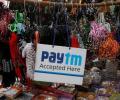
The Enforcement Directorate on Monday said it has issued a Rs 611 crore show cause notice to Paytm's parent company and linked entities for "contravention" of the FEMA on various counts.

As India's biggest Unified Payments Interface (UPI) app PhonePe prepares to list, the updated draft red herring prospectus (DRHP) shows the impact of regulations on the business, and concentration of payments-linked revenue even as UPI lacks MDR (merchant discount rate).
The Enforcement Directorate has sent a notice to Paytm-owner One97 Communications for alleged violation of certain FEMA rules by the company and its two subsidiaries- Little Internet and Nearbuy, with respect to certain investment transactions, according to an exchange filing. Paytm clarified that the alleged breach pertains to the period when the two companies were not its subsidiaries.

Get a new QR code from an alternative provider. PhonePe, Google Pay, Pine Labs, etc are some of the other service providers.

Fintech firm One97 Communications' managing director and chief executive officer Vijay Shekhar Sharma has voluntarily surrendered 2.1 crore shares worth about Rs 1,800 crore, as per a regulatory filing and share closing price of the company.

New-age stocks to buy: Most new-age stocks have turned out to be wealth destroyers in stock markets, so far, in calendar year 2025. Shares of Ola Electric Mobility, for instance, have plunged nearly 50 per cent in the first half of CY 2025, while those of Swiggy, PB Fintech, Paytm, and Eternal (Zomato) have crashed between 6 per cent and 25 per cent, ACE Equity data shows.
The Paytm application (app) could potentially face a permanent loss of its integrated mobile wallet feature, currently owned by Paytm Payments Bank (Paytm PB). With the recent crackdown on Paytm PB, sources say getting a fresh wallet licence may get tough for the group. "The Paytm app (One97 Communications) has to apply afresh to the RBI for a licence to operate a prepaid payment instrument (PPI) like a mobile wallet within the Paytm app, as PPI is a regulated entity.

The National Payments Corporation of India (NPCI) has granted approval to Paytm to onboard new UPI users, subject to the adherence to all procedural guidelines and circulars, according to the company. The move is expected to come as a relief to Paytm, which had suffered a blow following the Reserve Bank of India's restrictions earlier this year on associate company Paytm Payments Bank Limited (PPBL) in onboarding new UPI users on the Paytm app. In March, the NPCI gave approval to Paytm to participate in UPI as a Third-Party Application Provider (TPAP).

Startup founders need to sit up and think about how not to take stardom for granted and how not to disappoint their fans who have stood in long queues for those precious selfies with popular entrepreneurs, notes Nivedita Mookerji.
Paytm will focus on its core business of payments and cross-selling financial services as it works to achieve "profitability soon", said Vijay Shekhar Sharma, founder and chief executive officer of the fintech, on Thursday. "The past six months have taught us many lessons, giving us the opportunity to thoroughly examine our business processes, compliance, and the way we operate from the inside out.

At the heart of Paytm's slide lies the abject failure of its Super App strategy, notes Indrajit Gupta.

The Directorate of Enforcement (ED) has launched a preliminary investigation or a pre-open inquiry into alleged violations related to the Foreign Exchange Management Act (Fema) in the Paytm Payments Bank case, according to sources in the know. The probe follows serious concerns raised by the Reserve Bank of India on multiple violations by the Paytm bank, which is a joint venture between One97 Communications, which is the parent company of Paytm, and the group's founder Vijay Shekhar Sharma.
Going by the RBI directive and the overall narrative, Paytm may have lost the rigour of stress tests, audits and compliance.
Paytm, the country's leading fintech player which had to shut its payment bank business following regulatory action, is revisiting its business strategy including partnership with lenders. Also, the company's founder and chief executive officer (CEO) Vijay Shekhar Sharma has decided to oversee the day-to-day operations with all the major verticals reporting directly to him now. "The thing on top of everyone's agenda is getting the core businesses back on track," a person in the know said.

One97 Communications Ltd (OCL), the company that operates the Paytm brand, posted a consolidated loss of Rs 539.8 crore in the fourth quarter of 2024-25 (Q4FY25), slightly lower from the Rs 549.6 crore it reported in Q4FY24. Sequentially, the fintech company's loss widened from Rs 208.3 crore in Q3FY25 on account of a one-time exceptional expense amounting to Rs 522 crore during the quarter ended March 2025.
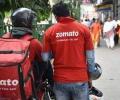
Food delivery platform Zomato has laid the foundation for its third vertical of growth by agreeing to acquire Paytm's entertainment and ticketing business, said analysts on Thursday (August 22). Zomato, which also runs a quick commerce business called Blinkit, will strengthen its 'going out' offering but the acquisition may take time to yield results, they said. "Paytm's entertainment and ticketing arm will be part of Zomato's District app, which is due to be launched in the coming weeks.
One97 Communications (OCL), the company that operates brand Paytm, received a nod from the National Payments Corporation of India (NPCI) to onboard new Unified Payments Interface (UPI) users. This comes nearly nine months after the Reserve Bank of India (RBI) placed an embargo on OCL to add new customers.

It's mid-morning and the two-kilometre stretch from Rashbehari Avenue to Gariahat Market is bustling with activity. Dotted with saree shops and hawker stalls that sell everything, from hairpins, hangers and towels to hosiery, mobile phone covers and kurtas, this is one of South Kolkata's busiest shopping areas. And it is beginning to wake up to the Paytm crisis.

Japan's Softbank investment arm Softbank Vision Fund exited from Paytm in the June quarter at a loss of around $150 million, sources aware of the development said. Softbank invested about $1.5 billion in One97 Communications -- the owner of Paytm brand -- in tranches in 2017. "Softbank has exited Paytm at a loss of 10-12 per cent.
The Reserve Bank of India (RBI) has barred Paytm Payments Bank from most operations, including taking deposits and fund transfers with effect from March 1, 2024. The curbs on the bank come amid several alleged failures such as violations of know-your-customer (KYC) norms. Under such a scenario, here's what works for customers using Paytm Payments Bank, according to the company.
Paytm operator One97 Communications Ltd on Wednesday said it is not in talks to sell a stake to the Adani Group. Adani group has also termed such reports as "false and untrue." Commenting on a report that billionaire Gautam Adani was in talks with Paytm CEO Vijay Shekhar Sharma for a possible stake buy, One97 Communications said, the "news item is speculative and the company is not engaged in any discussions in this regard."

Payment apps PhonePe and Paytm have helped citizens avert potential financial frauds worth Rs 200 crore by using the fraud risk indicator platform developed by the Department of Telecom, a senior Walmart group official said on Wednesday.
Fintech firm One97 Communications, which owns the Paytm brand, has received support from merchants, and it assured them of continuity of services without any disruption, the company said in a blog on Sunday. The blog post came amid the recent crisis around Paytm Payments Bank Limited (PPBL), an associate company of Paytm, which has been barred by the RBI from accepting deposits or top-ups in customer accounts, wallets, FASTags and other instruments after February 29.

Fintech firm One97 Communications, owner of Paytm brand, is laying off an undisclosed number of employees and claimed that it is providing outplacement support for their smooth transition, according to a company statement. Paytm's sales employee headcount in March 2024 quarter dropped by about 3,500 to 36,521 personnel on a quarter-on-quarter basis, mainly due the impact of the Reserve Bank of India's ban on services of Paytm Payments Bank.
Has Vijay Shekhar Sharma given up on the bank? For now, he seems to be on a save-OCL mission. The bank will face its logical end, observes Tamal Bandopadhyay.
Fintech firm One97 Communications, which owns Paytm brand, on Friday said its loss has widened to Rs 840 crore in the quarter ended June 30, primarily due to continued impact of restrictions on Paytm Payments Bank Ltd. The company had posted a loss of Rs 358.4 crore in the same period a year ago, according to a regulatory filing by the company. The consolidated revenue of Paytm declined 33.48 per cent to Rs 1,639.1 crore during the reported quarter, from Rs 2,464.2 crore in the same period a year ago.

Shares of One97 Communications (OCL), which provides financial services under the brand 'Paytm', and has a banking arm Paytm Payments Bank (PPBL), hit the 5 per cent upper circuit at Rs 428.10 on the National Stock Exchange (NSE) in Monday's (February 26) intraday trade. The up move in the stock on Monday came after the Reserve Bank of India (RBI) asked the National Payments Corporation of India (NPCI), in post stock market hours, to look into the possibility of migrating PPBL customers, using the UPI handle '@paytm', to four-to-five other banks.

Online food delivery platform Zomato will acquire Paytm's entertainment ticketing business for Rs 2,048 crore to strengthen its "going-out" segment in a deal that will help the troubled fintech firm to sharpen its focus on core payments and financial services distribution.
The National Payments Corporation of India on Thursday granted approval to Paytm-owner One97 Communications Ltd to participate in UPI as a Third-Party Application Provider (TPAP) under the multi-bank model. Axis Bank, HDFC Bank, State Bank of India, and YES Bank will act as Payment System Provider (PSP) banks to Paytm.

SoftBank's early India bets are beginning to deliver. The Japanese investor, which clocked nearly 5.4x returns on Lenskart and chose to stay invested in Meesho ahead of its public listing, has so far returned close to $7 billion from India to its global investors.

Beleaguered Paytm Payments Bank's managing director and CEO Surinder Chawla has resigned from the company, a regulatory filing said on Tuesday. Chawla's resignation comes amidst Paytm Payments Bank facing prohibitory action from banking regulator RBI. "Surinder Chawla, managing director and CEO of PPBL, has tendered his resignation on April 8, 2024, on account of personal reasons and to explore better career prospects.

Digital payments provider Paytm is all set to make its market debut as early as this year, with an aim to raise $3 billion (around Rs 22,000 crore). If successful, this could be the biggest initial public offering (IPO) by an Indian company, breaking Coal India's 2010 record of Rs 15,475 crore. According to media reports, the board of One97, parent company of Paytm, is all set to meet this Friday to formally approve the IPO plan.
Fintech firm One97 Communications, which owns the Paytm brand, on Wednesday said its loss in the fourth quarter of the financial year 2023-24 has widened to Rs 550 crore following the ban imposed by the RBI on transactions related to its payments bank. The company had posted a loss of Rs 167.5 crore in the same period a year ago, the company said in a regulatory filing. "Our fourth quarter FY24 results were impacted by temporary disruption on account of UPI transition etc. and permanent disruption because of the PPBL embargo.
Reserve Bank of India on Friday said NPCI has been asked to examine the possibility of it becoming a third party application provider for continued UPI operations of the Paytm app. The central bank has barred Paytm Payments Bank from accepting further credits into its customer accounts and wallets after March 15, 2024.

Investors of online brokerage house Zerodha on Monday said its users might face some problem while executing sell orders due to "an issue" related to depository CDSL. It tweeted, "You may face an issue with authorizing the sale of your stocks due to an issue with CDSL. "We are in touch with CDSL to have the issue resolved at the earliest."

Fino Payments Bank (Fino) has become the first such entity to get an in-principle approval from the Reserve Bank of India (RBI) to transition into a small finance bank (SFB).
As it readies for its initial public offering (IPO) later this year, digital payments firm Paytm is honing its strengths to remodel itself from being a payment wallet to becoming a financial services provider, and is working towards narrowing its losses, evident from its most recent Annual Report. Unlike many of its peers, Paytm has started expanding its merchant payment ecosystem. It has realised that though it can take the maximum share of the Unified Payment Interface (UPI) transactions, from a revenue generation point of view it will not have any impact.
